Every December, cars start backing up near the covered wooden bridge at the entrance to The Vineyard. Some idle at the water wheel to snap a photo. Most keep rolling, past the pond, toward one specific pocket of the neighborhood: Chardonnay. By the second week of the month, that single addition is carrying holiday traffic that has nothing to do with anyone who lives there.
The easy explanation is that Chardonnay residents just try harder. Ask around Norman and you'll hear some version of that story: a few competitive neighbors, a lot of extension cords, a tradition that snowballed. It's a nice story. It's also not the real one.
The real answer is sitting in the site plan.
The Yard Nobody Blocked With a Driveway
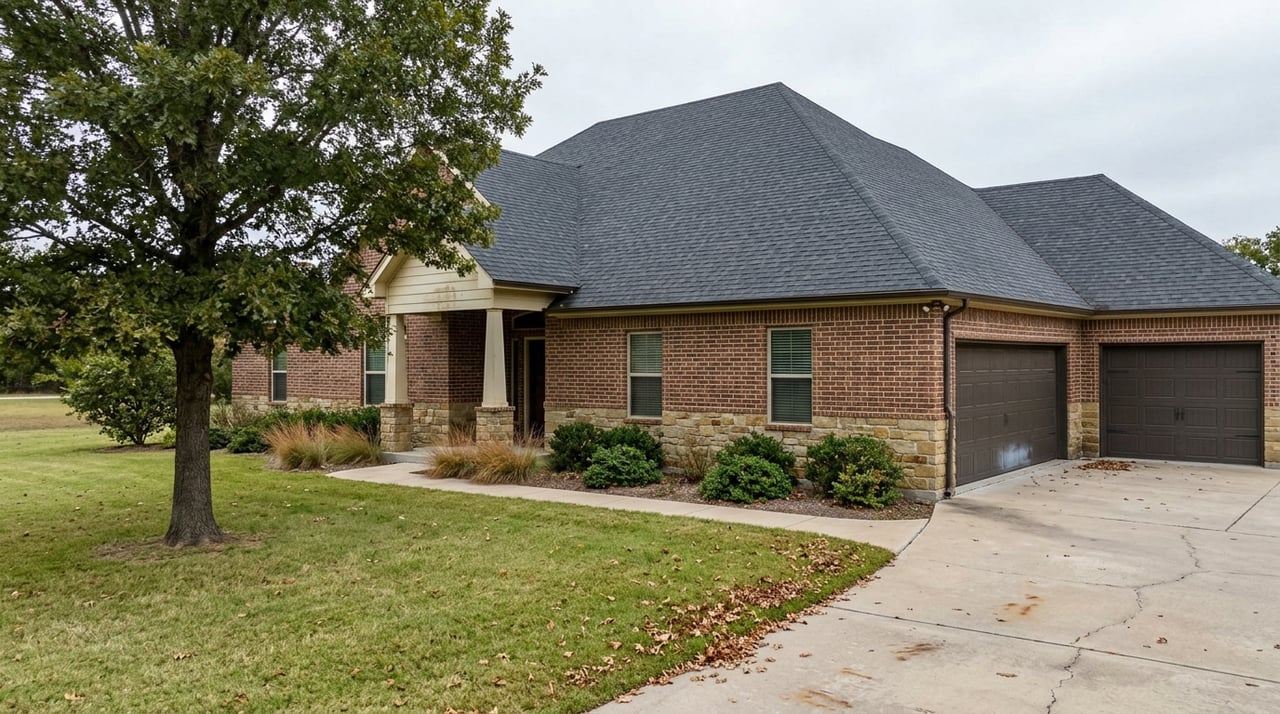
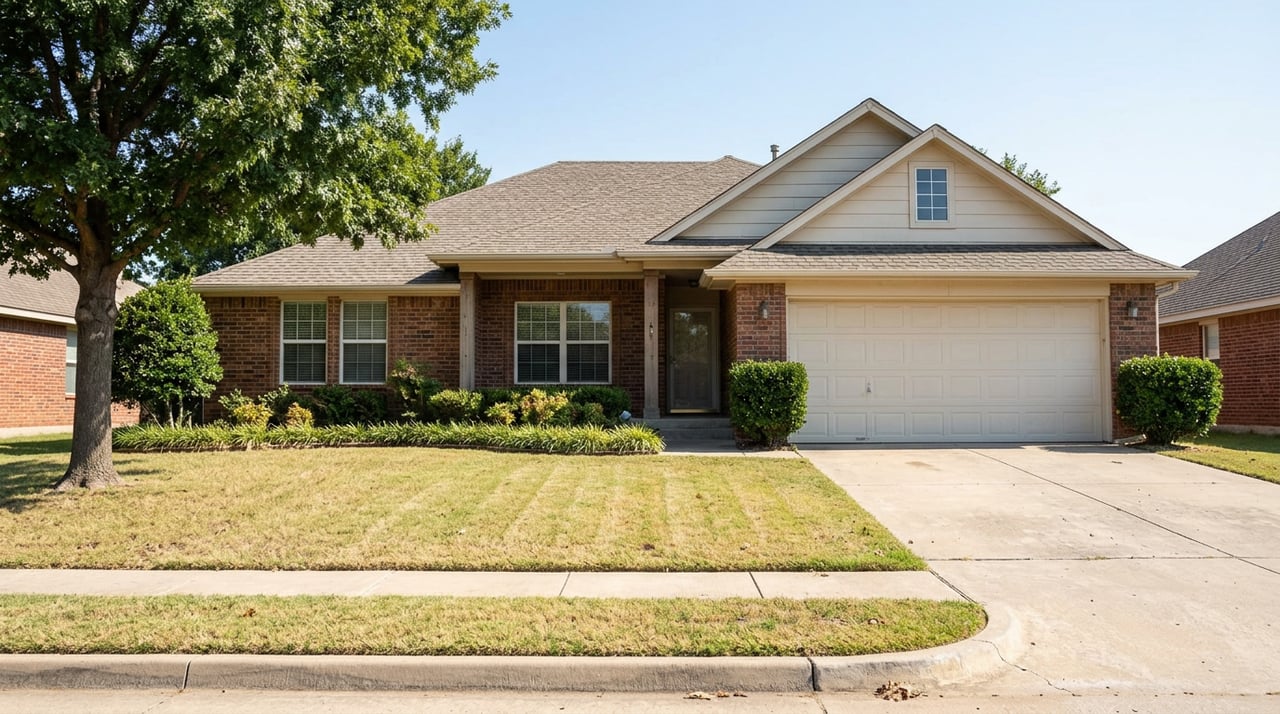
Walk most newer subdivisions in Norman and the front of a house tells you the same thing every time: a two-car garage facing the street, a wide concrete driveway cutting the yard in half, a narrow strip of grass on either side for whatever shrubs fit. That's the standard layout across the metro, and it's the layout in most of The Vineyard too.
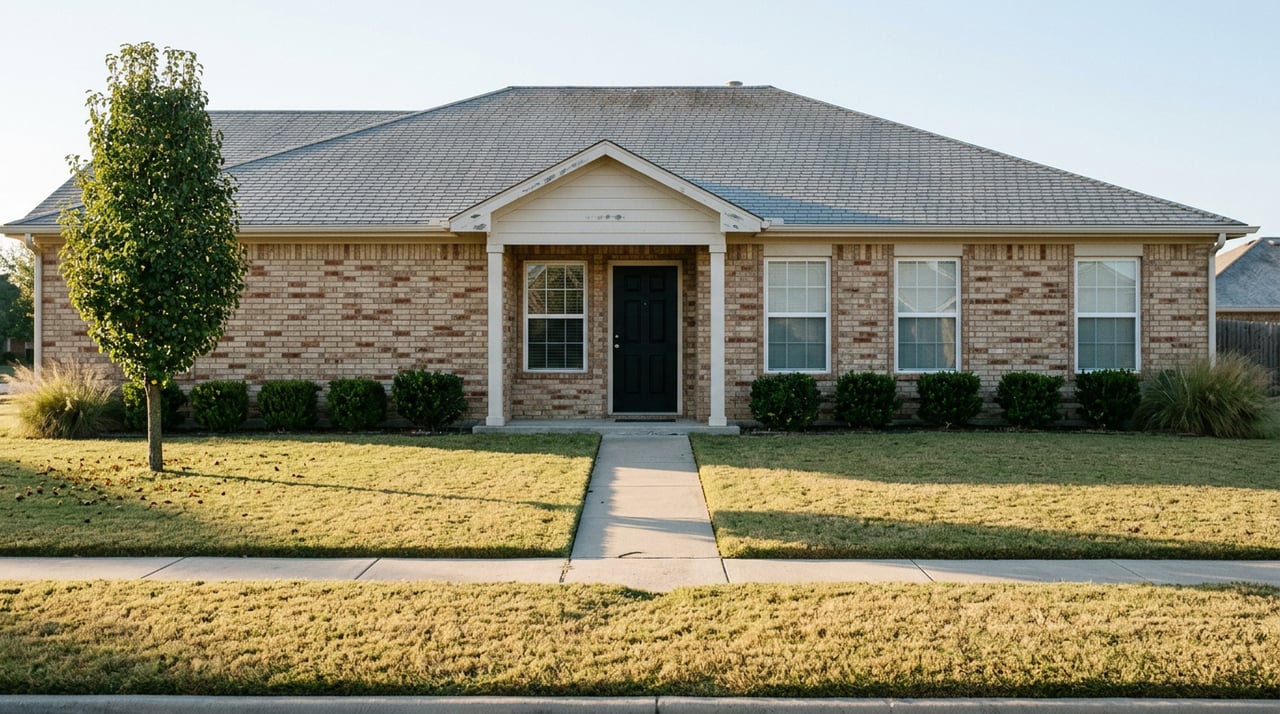
Chardonnay was built differently. In that addition, garages sit at the back of the lot instead of the front, which means there's no driveway apron eating into the yard and no garage door interrupting the front elevation. What's left facing the street is a full, unbroken run of lawn and planting beds, maintained on a shared schedule by the same crew across every house in the section.
That's not a small detail. It's the difference between a street where every third yard has a driveway splitting the display in two, and a street where the canvas runs uninterrupted from one property line to the next. A few homeowners with string lights on a normal lot get a nice porch. A whole block of homeowners with unbroken yards and matched trim work get something that reads, from a car window, like one continuous display. Chardonnay didn't out-effort the rest of the neighborhood. It had a floor plan that made the effort go further.
How the Outside Traffic Actually Gets There
The Vineyard sits off North Porter Avenue, just south of Tecumseh Road, close enough that I-35, OU, and downtown Norman are all about a five-minute drive away. Visitors coming from outside the neighborhood generally take the same path: off I-35, east on Tecumseh, south on Highway 77, east on Rock Creek, then north on Porter until they reach the entrance.
That route funnels every outside car through the same choke point: the bridge and water wheel at the front of the neighborhood, which sits well before the turn into Chardonnay itself. If you live anywhere in The Vineyard, that entrance is your entrance too, and for a few weeks in December it's carrying more than local traffic.
A neighborhood only becomes a destination when the way it was built makes that easy to happen by accident.
That's worth sitting with, because it means the traffic isn't really about Chardonnay at all. It's about geography. One entrance, one bridge, one road in and out, and a section of the neighborhood built to look its best exactly when everyone's looking.
The Quieter Way to See It
If you'd rather skip the backup at the bridge, the neighborhood's own layout gives you a way around it. The Vineyard's sub-neighborhoods are connected by a network of walking paths, and Vineyard Park, at 3111 Woodcrest Creek Drive, sits inside that network with a jogging and walking course, a basketball court, a playground, and picnic tables.
A short loop on foot gets you the same view without the idling cars:
- Park at or walk from Vineyard Park and pick up the walking course heading toward the interior streets.
- Follow the connecting path toward Chardonnay rather than driving Porter Avenue, which keeps you off the entrance bottleneck entirely.
- Walk the block on foot, at whatever pace you want, instead of inching forward in a line of cars with their brake lights on.
- Loop back through the park on the return leg, since the course connects back to the same starting point.
It's slower than driving through, and that's the point. You see more detail up close than you ever would from behind a windshield, and you're not adding to the backup at the bridge that everyone living further in has to sit through anyway.
What the Traffic Doesn't Show You
The part visitors never think about is who's paying for the version of the neighborhood they're driving through. The Vineyard's homeowners association runs around $70 a month, and that fee is what keeps the walking paths connected, the common areas maintained, and in Chardonnay's case, the shared yard care that makes the display possible in the first place. The lights are seasonal. The maintenance behind them runs all year.
That's also why the display keeps growing instead of fading. A few individual homeowners burning out on string lights after a couple of years is normal. A shared maintenance schedule that keeps every yard on the same footing, year after year, is a different kind of consistency, and it's the kind that compounds. Ask around the neighborhood and you'll hear the same word residents keep coming back to when they talk about why they stay: walkable. The paths that make December bearable on foot are the same ones people use every other month of the year to get to the park, walk a dog, or just get somewhere without touching Porter Avenue at all.
None of this means Chardonnay's neighbors aren't putting in the work. They clearly are, every year, on a schedule that outside cars only see for a few weeks. But the reason that work turns into a regional draw instead of just a nice porch or two comes down to something nobody driving through ever notices: a garage in the back instead of the front, and a shared crew keeping every yard on the same page.
If you've lived in The Vineyard through a few Decembers already, none of this changes your commute home in the last two weeks before Christmas. But it might change how you explain it to the out-of-town guest riding in the passenger seat, confused about why one street looks like it belongs on a postcard and the next one over just looks like a nice subdivision.
A little over three months from now, this stretch of Porter Avenue is going to be exactly what it is every year. If you want a head start on beating the worst of it, or you're just curious what a similar-style home in Chardonnay or elsewhere in The Vineyard is actually worth in today's market, Your OKLA Home is a text away. Alaina works this neighborhood block by block, and a free home valuation costs you nothing but a few minutes.